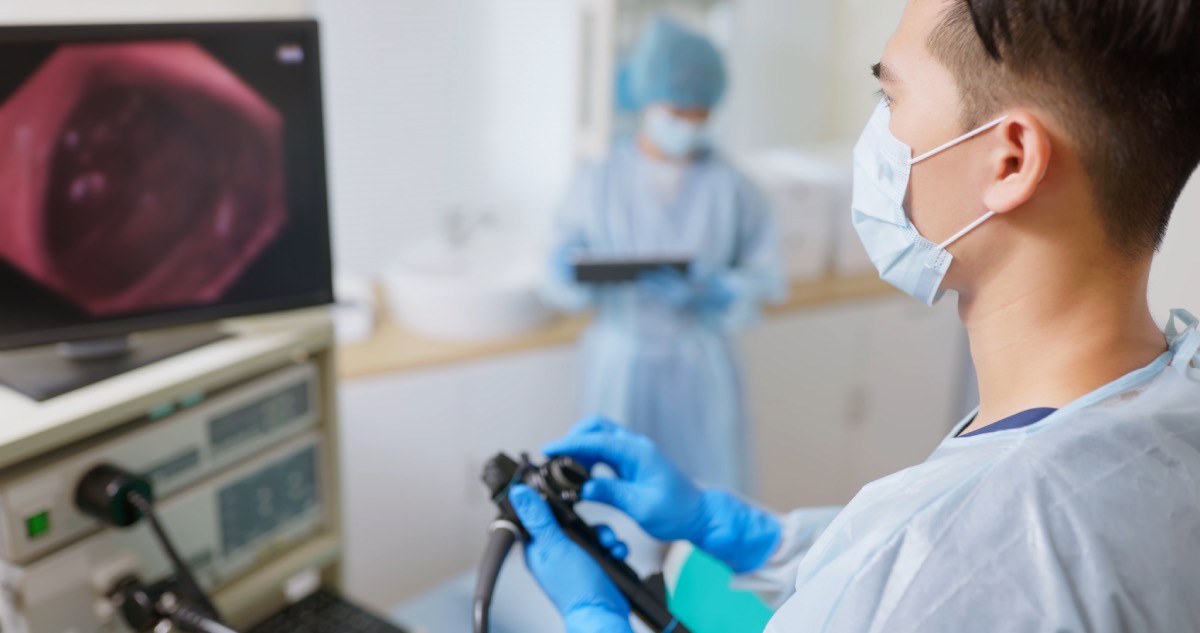
Colonoscopy is a central tool for colorectal cancer prevention because it allows direct visualization of the colon and removal of precancerous polyps. The success of colonoscopy depends on how effectively these lesions are identified, a concept commonly described as polyp or adenoma detection sensitivity. Higher detection rates are strongly linked to lower rates of interval colorectal cancer. Several factors influence detection quality, including adequate bowel cleansing, careful inspection of the colon lining, enough time spent examining the colon during scope withdrawal, and the patient’s ability to tolerate the procedure. Sedation is frequently used to improve comfort, but its effect on polyp detection sensitivity remains an important and debated issue, particularly in regions where unsedated colonoscopy is commonly performed (1).
Sedation during colonoscopy, most often achieved with benzodiazepines, opioids, or propofol, is intended to reduce pain and anxiety. Improved comfort may allow the endoscopist to advance the scope more easily, complete the examination reliably, and examine the colon more carefully. From a practical standpoint, sedation can reduce patient movement and discomfort, potentially allowing more time and attention to be devoted to inspecting the colon for subtle lesions. In contrast, unsedated colonoscopy may be associated with discomfort that could limit how thoroughly the colon is examined, especially during scope withdrawal, when most polyps are detected. However, unsedated procedures may also be shorter and can improve active communication between patient and physician, which some clinicians believe helps maintain careful technique (1).
Several studies suggest that sedation is associated with improved polyp detection. In a large retrospective cohort study, Zou et al. found that sedated colonoscopy was associated with significantly higher polyp detection and adenoma detection rates compared with unsedated procedures, even after adjusting for patient and procedural factors (2). The authors proposed that improved patient comfort allowed for slower and more deliberate inspection of the colon wall, increasing the likelihood of identifying small or flat lesions that might otherwise be missed. These findings support the idea that sedation may enhance polyp detection sensitivity in routine colonoscopy.
Other investigations, however, have reported minimal or no difference in detection quality between sedated and unsedated colonoscopy. Krigel et al. evaluated key quality indicators in unsedated colonoscopy and found that detection rates and examination completeness remained high when procedures were performed by experienced endoscopists (3). This suggests that technical skill, careful inspection, and adherence to quality benchmarks may be more important than sedation status alone. Similarly, a recent analysis by Qi et al. reported that sedated colonoscopy did not consistently result in higher polyp or adenoma detection, indicating that sedation is not universally beneficial for detection sensitivity (4).
Taken together, available evidence indicates that the impact of sedation on polyp detection sensitivity during colonoscopy is complex and influenced by multiple factors. While sedation may improve comfort and facilitate more careful examinations in some settings, it does not replace the importance of established quality practices. Guidelines emphasize that thorough inspection of the colon, adequate time spent during withdrawal, and endoscopist experience are the strongest determinants of detection performance (1). Sedation should therefore be considered a supportive measure rather than a primary driver of detection quality.
References
1. Rex DK. Key quality indicators in colonoscopy. Gastroenterol Rep (Oxf). 2023;11:goad009. Published 2023 Mar 10. doi:10.1093/gastro/goad009
2. Xu C, Tang D, Xie Y, et al. Sedation Is Associated with Higher Polyp and Adenoma Detection Rates during Colonoscopy: A Retrospective Cohort Study. Gastroenterol Res Pract. 2023;2023:1172478. Published 2023 Feb 18. doi:10.1155/2023/1172478
3. Krigel A, et al. Unsedated colonoscopy: impact on quality indicators. Dig Dis Sci. 2020;65(11):3116-3122. doi:10.1007/s10620-020-06491-0
4. Qi X, et al. Sedated colonoscopy may not be beneficial for polyp/adenoma detection. Cancer Control. 2024;31:10732748241272482. doi:10.1177/10732748241272482