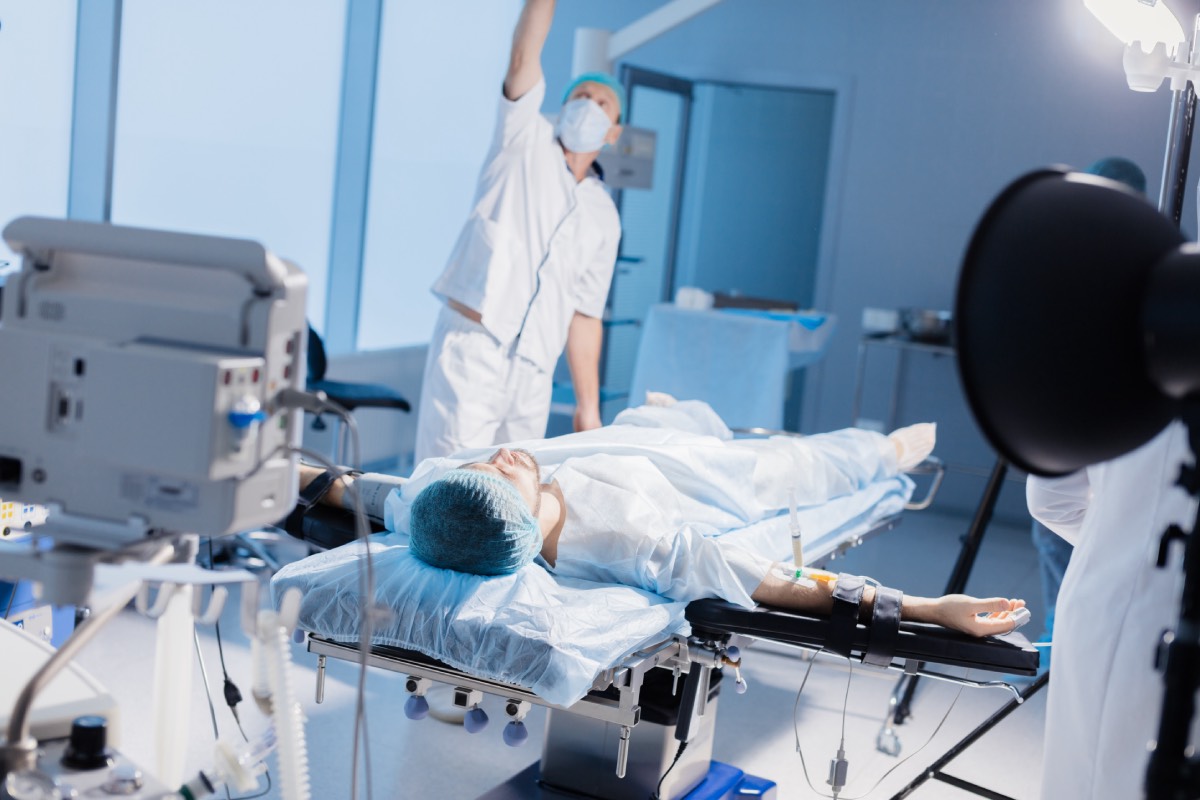
The ulnar nerve originates from the brachial plexus and travels down the arm, passing posterior to the medial epicondyle of the humerus at the elbow. At this location, the nerve is relatively superficial and lacks significant protective tissue. Impact in this area is what produces the sensation commonly referred to as the hitting the “funny bone.” Due to its exposed position, it is particularly susceptible to compression or stretch during surgical procedures when the patient is unable to perceive or respond to discomfort, making protective patient positioning an important step in preventing perioperative ulnar nerve injury 1.
Ulnar nerve injury most commonly occurs in the perioperative period as a result of compression, stretch, or ischemia due to improper patient positioning. Compression can develop when the medial aspect of the elbow rests against a hard surface such as an operating table or arm board for a prolonged period. Stretching, in contrast, may occur when the elbow is excessively flexed, particularly beyond 90 degrees, or when the arm is improperly aligned. In addition, sustained pressure can impair blood flow to the nerve, leading to ischemic injury. Finally, external contributors, such as tight restraints, poorly positioned padding, or draping, may further increase the likelihood of nerve injury, especially during longer procedures 2–4.
Several patient-related and procedural factors can increase the risk of ulnar nerve injury. Male patients and individuals with a low body mass index appear to be more vulnerable, possibly due to reduced natural cushioning around the nerve. Pre-existing conditions such as diabetes mellitus, peripheral vascular disease, or chronic alcohol use may also predispose patients to nerve injury. Furthermore, from a procedural standpoint, longer surgeries and surgeries requiring fixed positioning without periodic reassessments tend to increase the overall risk, particularly under general anesthesia when patients cannot adjust their own position or express discomfort 5–7.
The symptoms of ulnar nerve injury are often not immediately apparent. Patients typically report numbness or tingling in the ring and little fingers, along with weakness in grip strength or difficulty with fine motor coordination. In more severe cases, prolonged dysfunction can lead to muscle weakness or characteristic hand deformities if the injury is not recognized and managed in a timely manner 5,6.
Effective prevention relies on careful attention to patient positioning throughout the procedure—a patient’s arms should be positioned in a neutral alignment, either tucked at the patient’s sides or supported on arm boards, with the elbows maintained in a slightly extended or neutral position rather than excessive flexion. Adequate padding should be placed around the elbows to minimize direct pressure on the medial epicondyle, and the forearms should be positioned in a supinated or neutral orientation to reduce stress on the nerve. Continuous monitoring and periodic reassessment during longer cases are essential to ensure that positioning remains appropriate and protective 3,6.
Early recognition of ulnar nerve injury is critical to its treatment. Initial management is typically conservative, involving observation, supportive care, and avoidance of further compression. In many cases, the injury represents a temporary neuropraxia that resolves over a period of weeks to months. However, if symptoms persist or worsen, further evaluation with diagnostic studies may be necessary, and in rare instances, more advanced interventions may be considered 3,5,8,9.
Ulnar nerve injury related to perioperative patient positioning remains a significant but largely preventable complication. A thorough understanding of the nerve’s anatomical vulnerability, combined with consistent attention to proper positioning techniques, plays a critical role in reducing risk.
References
1. Becker, R. E. & Manna, B. Anatomy, Shoulder and Upper Limb, Ulnar Nerve. in StatPearls (StatPearls Publishing, Treasure Island (FL), 2026).
2. Winfree, C. J. & Kline, D. G. Intraoperative positioning nerve injuries. Surgical Neurology 63, 5–18 (2005). DOI: 10.1016/j.surneu.2004.03.024
3. Hewson, D. W., Kurien, T. & Hardman, J. G. Postoperative ulnar neuropathy: a systematic review of evidence with narrative synthesis. Br J Anaesth 131, 135–149 (2023). DOI: 10.1016/j.bja.2023.04.010
4. Prielipp, R. C., Morell, R. C. & Butterworth, J. Ulnar nerve injury and perioperative arm positioning. Anesthesiol Clin North Am 20, 589–603 (2002). DOI: 10.1016/s0889-8537(02)00009-3
5. Warner, M. A., Warner, M. E. & Martin, J. T. Ulnar neuropathy. Incidence, outcome, and risk factors in sedated or anesthetized patients. Anesthesiology 81, 1332–1340 (1994). DOI: 10.1097/00000542-199412000-00006
6. Duffy, B. J. & Tubog, T. D. The Prevention and Recognition of Ulnar Nerve and Brachial Plexus Injuries. Journal of PeriAnesthesia Nursing 32, 636–649 (2017). DOI: 10.1016/j.jopan.2016.06.005
7. openanesthesia. Peripheral Nerve Injury from Regional Anesthesia. OpenAnesthesia https://www.openanesthesia.org/keywords/peripheral-nerve-injury-from-regional-anesthesia/.
8. Woo, A., Bakri, K. & Moran, S. L. Management of Ulnar Nerve Injuries. Journal of Hand Surgery 40, 173–181 (2015). DOI: 10.1016/j.jhsa.2014.04.038
9. Hundepool, C. A. et al. Prognostic factors for outcome after median, ulnar, and combined median–ulnar nerve injuries: A prospective study. Journal of Plastic, Reconstructive & Aesthetic Surgery 68, 1–8 (2015). ). DOI: 10.1016/j.bjps.2014.09.043